Questions and answers
Here are some common questions and answers regarding treatment with CARVYKTI® and CAR-T therapy for relapsed and/or refractory multiple myeloma. If you have additional questions, don't hesitate to contact us.
CARVYKTI® (ciltacabtagene autoleucel), pronounced car-VICK-tee, belongs to a class of treatments called CAR-T therapy. CARVYKTI® was approved by the FDA in 2022 and is indicated for the treatment of adult patients with relapsed or refractory multiple myeloma, who have received at least 1 prior line of therapy, including a proteasome inhibitor and an immunomodulatory agent, and are refractory to lenalidomide.1
CARVYKTI® is an autologous immunotherapy in which a patient’s T cells are genetically modified to encode a chimeric antigen receptor (CAR) to find and destroy B-cell maturation antigen (BCMA)–expressing cells. BCMA is overexpressed on the surface of malignant multiple myeloma B-lineage cells; it is also expressed on the surface of late-stage B cells and plasma cells.1
CAR-T=chimeric antigen receptor-T cell; FDA=Food and Drug Administration.
Chimeric antigen receptor-T cell therapy, known as CAR-T, is an approach in anticancer therapy in which a patient’s own T cells are genetically engineered to express a receptor to target specific proteins on the surface of cancer cells.1
CARVYKTI® is an autologous immunotherapy in which a patient’s T cells are genetically modified to encode a chimeric antigen receptor (CAR) to find and destroy B-cell maturation antigen (BCMA)–expressing cells.1
CAR-T=chimeric antigen T-cell.
What could a CARVYKTI® patient look like?1,2
- Adult patients with RRMM
- ≥1 prior LoT, including a proteasome inhibitor (PI) and an immunomodulatory agent
- Refractory to lenalidomide
- High- or standard-risk cytogenetics*
- Naïve, exposed, or refractory to anti-CD38 monoclonal antibodies
- ECOG PS 0 or 1
- No prior CAR-T or BCMA targeting therapy
- No known active or prior history of central nervous system involvement
- Does not exhibit clinical signs of meningeal involvement of multiple myeloma
- No history of Parkinson's disease or other neurodegenerative disorder
BCMA=B-cell maturation antigen; CAR-T=chimeric antigen receptor-T cell; CD38=cluster of differentiation 38; del=deletion; ECOG PS=Eastern Cooperative Oncology Group performance status; LoT=line(s) of therapy; RRMM=relapsed or refractory multiple myeloma; t=translocation.
*High-risk cytogenetics, presence of t(4:14), t(14:16), and 17p13 del, were present in 34% of patients.1
Dosing and administration1
CARVYKTI® is provided as a single dose for infusion containing a suspension of chimeric antigen receptor (CAR)-positive viable T cells in 1 infusion bag.
For more information about dosing and administration, see the full Prescribing Information.
Boxed Warning: Cytokine release syndrome (CRS), immune effector cell–associated neurotoxicity syndrome (ICANS), parkinsonism and Guillain-Barré syndrome, hemophagocytic lymphohistiocytosis/macrophage activation syndrome (HLH/MAS), prolonged and/or recurrent cytopenias, immune effector cell-associated enterocolitis, and secondary hematological malignancies1
- Warnings and precautions include: increased early mortality, prolonged and recurrent cytopenias, infections, hypogammaglobulinemia, hypersensitivity reactions, immune effector cell-associated enterocolitis, and secondary malignancies
- The most common nonlaboratory adverse reactions (≥20%) included: pyrexia, CRS, hypogammaglobulinemia, hypotension, musculoskeletal pain, fatigue, infections-pathogen unspecified, cough, chills, diarrhea, nausea, encephalopathy, decreased appetite, upper respiratory tract infection, headache, tachycardia, dizziness, dyspnea, edema, viral infections, coagulopathy, constipation, and vomiting
- The most common Grade 3 or 4 laboratory adverse reactions (incidence greater than or equal to 50%) include lymphopenia, neutropenia, white blood cell decreased, thrombocytopenia, and anemia
Please see Important Safety Information for CARVYKTI® (ciltacabtagene autoleucel) adverse events.
For adverse reactions observed in ≥10% of patients treated with CARVYKTI® and standard therapy in CARTITUDE-4, click here.
CARVYKTI® is an autologous immunotherapy in which a patient’s T cells are genetically modified to encode a chimeric antigen receptor (CAR) to find and destroy B-cell maturation antigen (BCMA)–expressing cells1
CAR-T with 2 BCMA-targeting single-domain antibodies1
- The CARVYKTI® CAR protein features 2 BCMA-targeting single-domain antibodies designed to confer high avidity against human BCMA, a 4-1BB costimulatory domain and a CD3-zeta (CD3ζ) signaling cytoplasmic domain
- Upon binding to BCMA-expressing cells, the CAR promotes T cell activation and expansion, and elimination of target cells
- Correlation of the mechanism of action with clinical effect has not been established
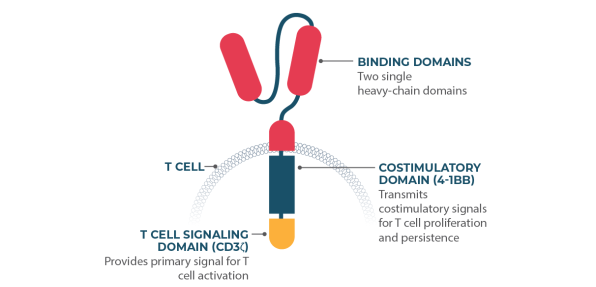
CAR-T=chimeric antigen receptor T cell; CD=cluster of differentiation.
At the manufacturing site, the patient’s T cells are isolated and genetically modified to express the CARVYKTI® CAR.1
CAR=chimeric antigen receptor; CAR-T=chimeric antigen receptor-T cell.
The efficacy of CARVYKTI® was evaluated in 2 studies, CARTITUDE-4 (NCT04181827) and CARTITUDE-1 (NCT03548207).1
For more information, see CARTITUDE-1 and CARTITUDE-4 Study Designs.
No, REMS is no longer required.1,3
In June 2025, the FDA released all CAR-T therapies, including CARVYKTI®, from the Risk Evaluation and Mitigation Strategy (REMS) program requirements pertaining to cytokine release syndrome (CRS) and neurologic toxicities.
This decision streamlines certain patient monitoring requirements and minimizes the burden on the healthcare delivery system.
Updated requirements
1. Monitoring post-infusion changed from daily for 10 days to 7 days for signs and symptoms of CRS and neurologic toxicities1
2. Patients to remain within proximity of a healthcare facility post-infusion, changed from at least 4 weeks to at least 2 weeks1
3. Reduced driving restrictions from 8 weeks to 2 weeks post-treatment1
For notification purposes only: CARVYKTI® recommends continuing to follow institutional protocols and guidelines, and cannot provide direction on how to manage patients.
Please see Important Safety Information for CARVYKTI® (ciltacabtagene autoleucel) and read full Prescribing Information, including Boxed Warning, for CARVYKTI®.
For a more detailed timeline of the most frequently occurring adverse events to watch out for, see Long-Term Safety.
CAR-T=chimeric antigen receptor-T cell; FDA=Food and Drug Administration.
Exact timing varies by patient.4
Identification and referral1
1. Patient is identified as eligible for CARVYKTI (A) and referred (B) to an Activated Treatment Center (ATC); they may undergo holding therapy (C) between referral and transfer to ATC if not transferred right away
Transfer to ATC and leukapheresis (3-6 hours)1
2. Patient is transferred to ATC (D), where they undergo the CARVYKTI® treatment process (E), starting with 3-6 hours of leukapheresis. During leukapheresis, a patient's white blood cells are extracted, cryopreserved, and sent to the manufacturing site
Bridging therapy during CAR-T cell manufacturing process (~4 weeks)1,4
3. After leukapheresis, while their CAR-T cells are being manufactured, the patient may undergo bridging therapy (E) for disease control before their treatment with CARVYKTI® at the discretion of the ATC physician, who may consult with the primary oncologist
4. During manufacturing, T cells are isolated and genetically modified to express the CARVYKTI® CAR. After quality control release, the CARVYKTI® CAR-T cells are cryopreserved and returned to the ATC for infusion. The turnaround time for CAR-T cell manufacture has improved to 4 weeks from apheresis to product*
Lymphodepletion (3 days)1
5. Patients are lymphodepleted with cyclophosphamide + fludarabine daily for 3 days
Wait time (2-4 days)1
6. Lymphodepletion takes place 2-4 days prior to infusion of CARVYKTI®
CARVYKTI® infusion (30-60 minutes)1
7. CARVYKTI® is administered in a single infusion.
Delay infusion until resolution (Grade ≤1) if your patient encounters:
- Clinically significant active infection or inflammatory disorders
- Grade ≥3 non-hematologic toxicities of cyclophosphamide and fludarabine conditioning, except for Grade 3 nausea, vomiting, diarrhea, or constipation
Post-infusion monitoring (F; 2 weeks)1
8. Patients are monitored daily at the ATC for the first 7 days following CARVYKTI® infusion
9. Patients are monitored periodically for the next 7 days after CARVYKTI® infusion
Long-term monitoring (G)1
10. Patients are monitored long-term by their primary oncology team in collaboration with the ATC team
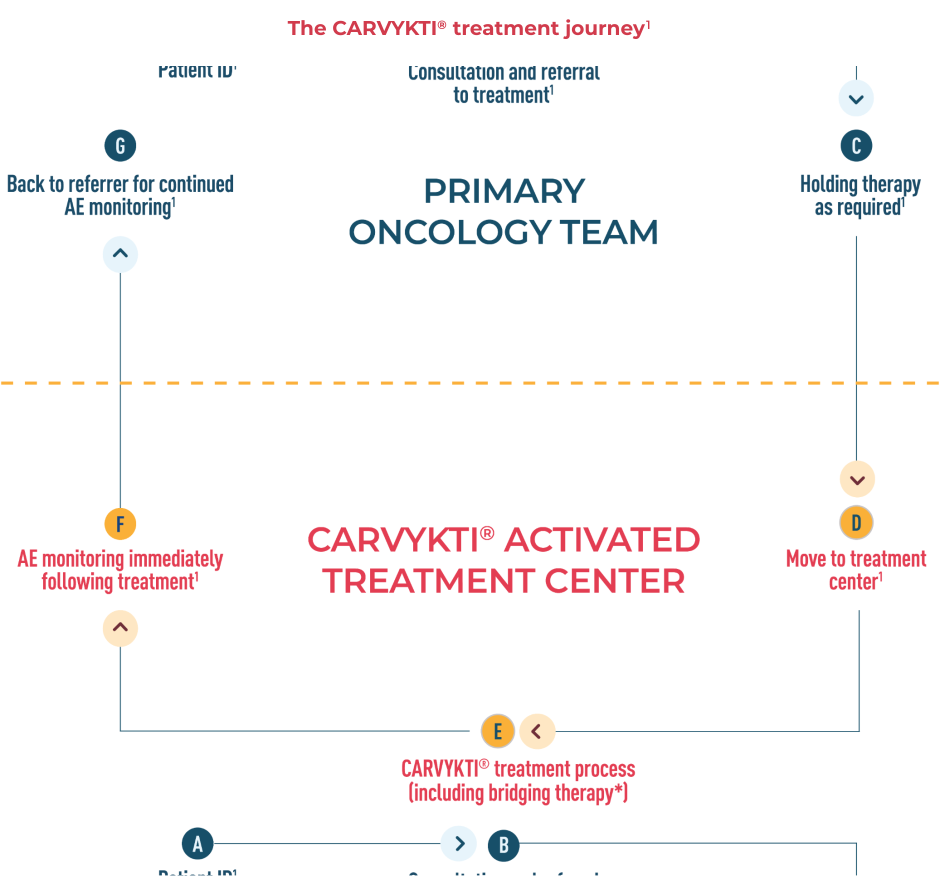
AE=adverse event; CAR=chimeric antigen receptor; CAR-T=chimeric antigen receptor-T cell; ID=identification.
*US median time from apheresis to product release was 30 days (January 2025 to June 2025).
NCCN
CATEGORY 1
THE FIRST AND ONLY CAR-T CELL THERAPY TO BE DESIGNATED AS NCCN CATEGORY 1 in the NCCN Clinical Practice Guidelines in Oncology (NCCN Guidelines®) for multiple myeloma after 1 prior therapy5
Ciltacabtagene autoleucel (CARVYKTI®) is listed under “Therapy for Previously Treated Multiple Myeloma Relapsed/Refractory Disease After 1-3 Prior Therapies” as an option after 1 prior line of therapy, including an immunomodulatory agent and a proteasome inhibitor (PI), and refractory to lenalidomide. Additionally, ciltacabtagene autoleucel (CARVYKTI®) is designated as Category 2A after 3 prior therapies.
CAR-T=chimeric antigen receptor-T cell; NCCN=National Comprehensive Cancer Network.
In January 2025, the International Myeloma Working Group (IMWG) immunotherapy committee published 9 consensus recommendations for immunotherapy sequencing in multiple myeloma (MM) treatment. The panel of 30 experts reviewed prospective clinical trials and real-world data and contacted authors for additional information when necessary.6
- TCRT, such as CAR-T, can be used after PI, an immunomodulatory agent, naked mAb, or corticosteroid, or any combination of these
- Avoid the use of TCE before initiating the CAR-T process
- Avoid alkylators and bendamustine before CAR-T cell therapy and/or TCE
- Use bridging therapy (BT) during CAR-T cell manufacturing
- Pursue BCMA-targeted CAR-T or TCE before an ADC
- Pursue BCMA-targeted CAR-T before a TCE
- Use TCE in rapidly progressing disease, unlikely to be effectively managed through apheresis and BT
- Use BCMA- and GPRC5D-targeted immunotherapies after CAR-T cell therapy
- Use a different mechanism or target antigen after rapid progression during or after a BCMA-targeted TCE
The IMWG guidance provides needed clarity around sequencing the many immunotherapies that are currently available, as the MM treatment landscape is rapidly evolving.6
ADC=antibody-drug conjugate; BCMA=B-cell maturation antigen; CAR-T=chimeric antigen receptor-T cell; GPRC5D=G protein-coupled receptor class C group 5 member; mAb=monoclonal antibody; PI=proteasome inhibitor; TCE=T-cell engager; TCRT=T-cell redirecting therapy.
Bridging therapy (BT) is a plasma cell-directed therapy administered during the manufacturing period6
- The time required for CAR-T manufacturing may allow tumor progression that can impact the safety of CAR-T cell infusion6
- The goal of BT is to avoid clinical deterioration and reduce disease burden after apheresis6
- BT is a recommended strategy to control disease and reduce tumor burden during CAR-T cell manufacturing, particularly in patients with aggressive or high-burden disease6
- Patients with a high disease burden or rapidly progressing disease prior to CAR-T infusion have an increased risk for more severe CRS and neurotoxicities6
- Prior to CAR-T infusion, BT helps reduce the risk of CRS, ICANS, and prolonged cytopenias5
- Selecting a regimen that does not involve agents to which a patient’s disease has become refractory should be a priority6
Early referral for CAR-T cell therapy helps expand the treatment options for bridging therapy7,8
CAR-T=chimeric antigen receptor-T cell; CRS=cytokine release syndrome; ICANS=immune effector cell-associated neurotoxicity syndrome.
Who is eligible for MyCARVYKTI®?
- To participate in MyCARVYKTI®, patients must have been prescribed CARVYKTI® and meet distance and income eligibility criteria
- A care partner may be required to accompany the patient during infusion and monitoring in order to receive support
- Participants must reside in the United States or its territories
- Support benefits that are provided by the patient’s health insurance plan and Activated Treatment Center must be used prior to utilizing benefits from the program, as the program does not provide duplicative support